


Assessment of environmental incidents related to centralized wastewater treatment systems in export processing zones and industrial parks in Ho Chi Minh City
- Institute for Science and Technology Innovation, Ho Chi Minh City, Vietnam
- Faculty of Environment, University of Science, Ho Chi Minh City, Vietnam
- Vietnam National University, Ho Chi Minh City, Vietnam
Abstract
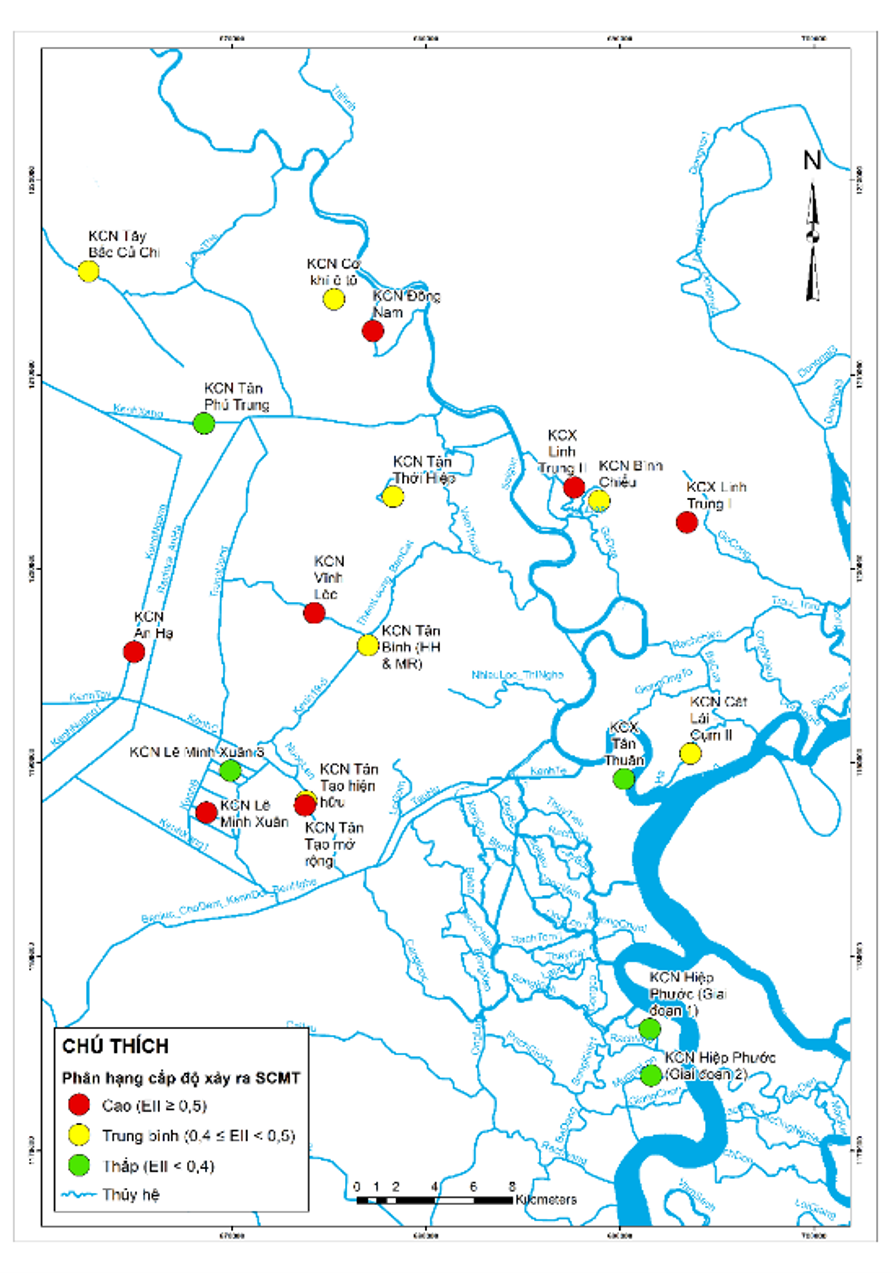
The large-scale development of export processing zones (EPZs) and industrial parks (IPs) in Ho Chi Minh City (HCMC) poses a potential risk of environmental incidents related to centralized wastewater treatment systems (CWTSs). These incidents can degrade receiving water sources, negatively impacting the environment and public health. Using an integrated approach, several methods were applied, including comprehensive document analysis, field surveys, Analytic Hierarchy Process (AHP), expert consultation, and calculation of the Environmental Incident Index (EII) based on criteria including 6 hazards, 8 exposures, and 6 vulnerabilities. Assessments of 19 CWTSs in 17 EPZs and IPs in HCMC showed EII values ranging from approximately 0.31 to 0.64. Among them, 5/19 systems (26%) had low risk (EII < 0.4), 7/19 systems (37%) had moderate risk (0.4 ≤ EII < 0.5), and 7/19 systems (37%) had high risk (EII ≥ 0.5). The study confirms the crucial role of environmental risk assessment for CWTSs through the EII to quantify and classify risk levels, thereby supporting environmental management in developing priority monitoring, prevention, and appropriate response solutions to environmental incidents for each system.