


Air quality index prediction with LSTM-MA model: A case study in Ba Ria – Vung Tau province, Vietnam
- Institute for Environment and Resources, VNU-HCM, Linh Xuan ward, HCMC, Vietnam
- Carbon neutral consulting center, Thu Dau Mot University, Phu Loi ward, HCMC, Vietnam
Abstract
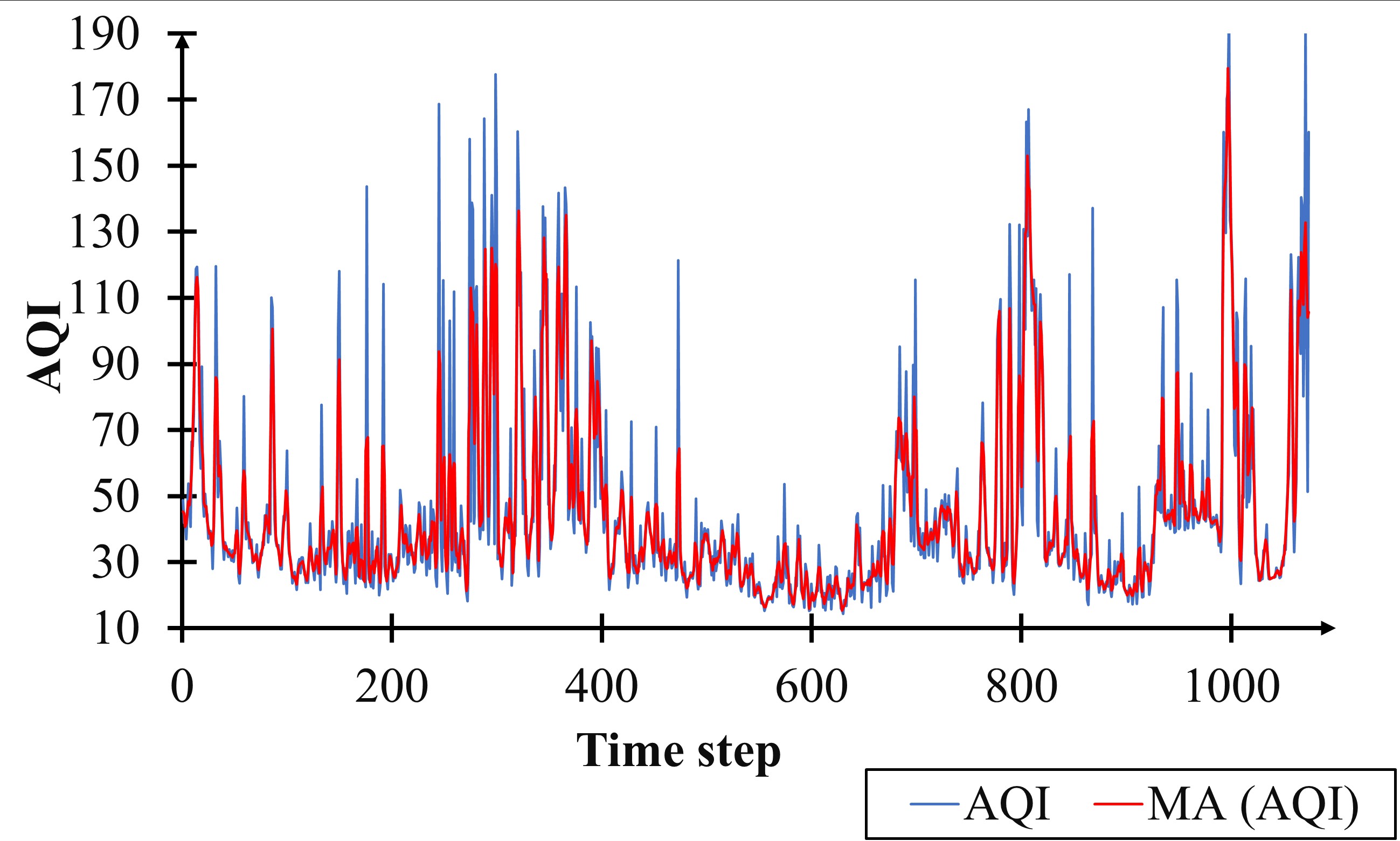
Air pollution significantly contributes to public health issues by increasing the incidence of respiratory and cardiovascular diseases; therefore, timely forecasting of air quality variations is essential for enhancing community awareness and supporting effective pollution management in urban areas. This study applies artificial intelligence techniques to predict air quality in Ba Ria–Vung Tau Province, Vietnam, using a Long Short-Term Memory (LSTM) model integrated with a Moving Average (MA) filter to reduce noise in the input dataset. Statistical analysis indicates that air quality in the study area is generally acceptable, with concentrations of CO, NO2, SO2, PM10, and PM2.5 mostly remaining below regulatory limits, while ozone concentrations frequently exceeded permissible thresholds and exerted a significant influence on the Air Quality Index (AQI). The proposed LSTM–MA model demonstrated strong predictive performance over a 7-day forecasting horizon, achieving Root Mean Square Error (RMSE) values ranging from 0.157 to 0.271 and Mean Absolute Percentage Error (MAPE) values between 30.0% and 31.0%. For longer forecasting periods from two weeks to one month, the model maintained satisfactory accuracy, with RMSE values of 0.186–0.497 and MAPE values of 46.3%–84.4%, and comparative analyses with conventional LSTM and ARIMA models confirmed that the proposed LSTM–MA approach provides improved forecasting accuracy and robustness.