
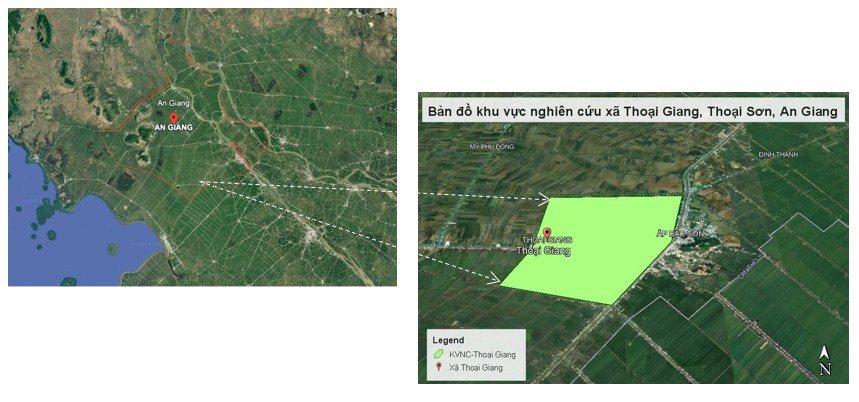


Assessment of rice straw management practices and estimation of CO₂ emissions from open-field burning in Thoai Son district, An Giang province
- An Giang University
- Vietnam National University Ho Chi Minh City
Abstract
An Giang Province serves as a key agricultural region within the Mekong Delta, playing an important role in Vietnam’s rice production and supply chain. However, intensive rice cultivation generates a large volume of agricultural residues, particularly rice straw, which is commonly burned in the field and constitutes a major source of CO₂ emissions. This study aims to assess rice straw management practices and estimate CO₂ emissions from open-field burning in Thoai Son District, An Giang Province, surveys were conducted with 50 farming households to collect data on straw utilization and disposal methods. The results show that all households cultivate three rice crops per year, with 96% of them practicing open burning after harvest. Other methods such as soil incorporation (66%), use as livestock feed (26%), and selling (10%) remain limited. The total CO₂ emissions from straw burning in Thoai Giang Commune were estimated at 17.7 thousand tons during the Winter–Spring crop, 11.6 thousand tons during the Autumn–Winter crop, and over 5 thousand tons during the Summer–Autumn crop, resulting in approximately 34.5 thousand tons per year. At the district scale, with an average annual burning rate of 0.66, about 605.9 thousand tons of straw were burned in 2023, equivalent to 545.5 thousand tons of CO₂ emissions. The findings highlight that open burning of rice straw is a significant contributor to greenhouse gas emissions and local air pollution. Therefore, an integrated straw management plan promoting recycling and reuse options is essential to reduce CO₂ emissions and support the development of a low-carbon agricultural system in the Mekong Delta.