
Non-revenue water: a predictive application using machine learning
- University of Science, 227 Nguyen Van Cu, Cho Quan Ward, Ho Chi Minh City, Vietnam
- Vietnam National University, Dong Hoa Ward, Ho Chi Minh City, Vietnam
- Ho Chi Minh City University of Natural Resources and Environment, 236B Le Van Sy, Tan Son Hoa Ward, Ho Chi Minh City, Vietnam
Abstract
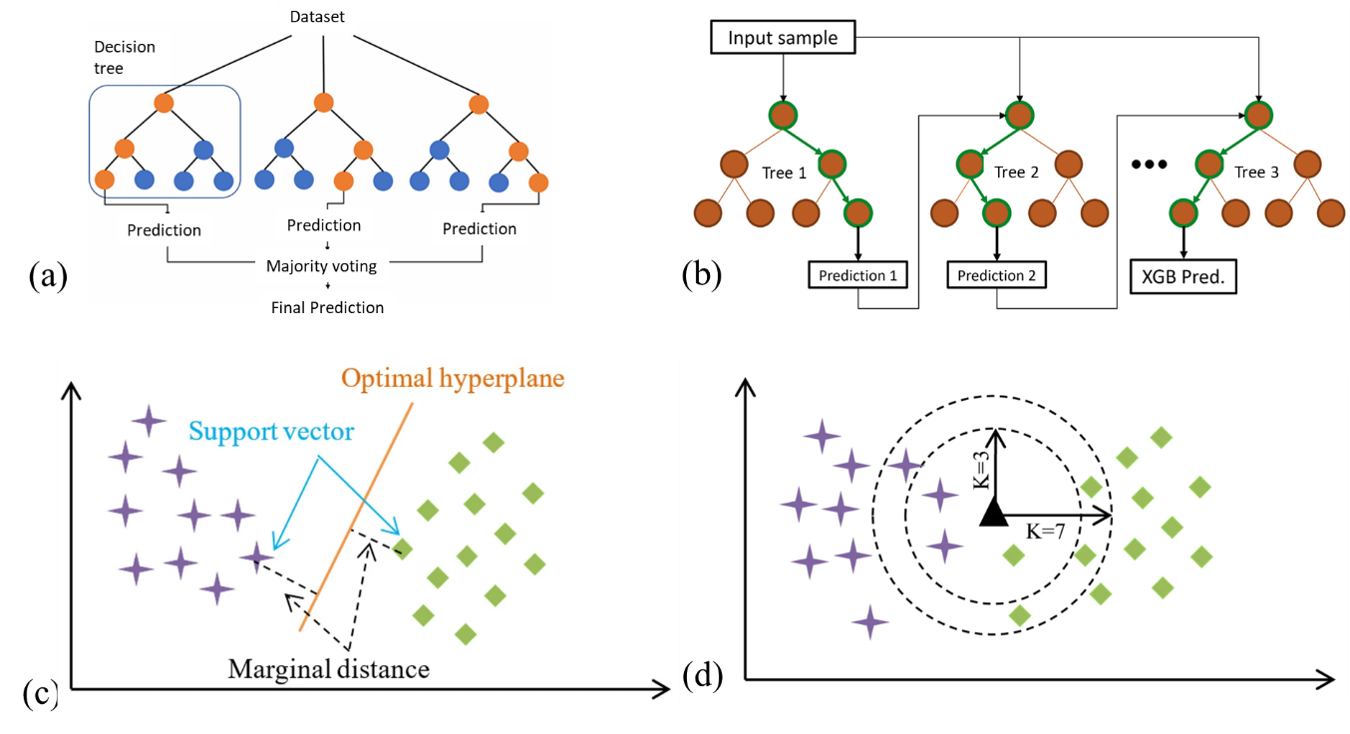
The shortage and loss of water resources is one of the critical issues in urban areas worldwide, with approximately 32 billion cubic meters of treated water lost annually through leakage from urban distribution systems. Forecasting the future Non-Revenue Water (NRW) rate is essential to mitigate resource depletion and economic waste, contributing to the United Nations' Sustainable Development Goal 6 on Clean Water and Sanitation. This study investigates the application of four machine learning models: Random Forest Regression (RF), Extreme Gradient Boosting Regression (XGBoost), Support Vector Regression (SVR), and K-Nearest Neighbours (KNN) to calculate and forecast the NRW rate of seven joint stock water supply companies under the Saigon Water Corporation (SAWACO) in Ho Chi Minh City, Vietnam. The dataset comprises monthly records from 2019 to 2024, including produced water volumes at treatment plants, distribution meter readings, and customer consumption volumes. The results demonstrate that the RF model provides the best performance for NRW rate prediction, with R2 > 0.8, RMSE < 1.5%, and MAE < 1% during training. The XGBoost and SVR models also produce satisfactory results with R2 > 0.7, RMSE and MAE respectively below 2% and 1.5%, although their test set performance is not as strong as RF. Forecasts through 2030 reveal a seasonal increase in NRW during February, attributed to higher domestic and industrial water demand that elevates pressure on the pipeline network. The results also indicate that water supply companies in inner-city areas record lower NRW (12–17%) compared to those serving suburban areas, reflecting disparities in water supply infrastructure and the impact of urbanization. The findings provide a scientific foundation for SAWACO's sustainable water management strategy and support the strategic development roadmap of Ho Chi Minh City.